In the annals of British sitcoms, few characters have left as indelible a mark as Hyacinth Bucket. Portrayed by Dame Patricia Routledge, Hyacinth is the epitome of social aspiration gone awry—a woman so desperate to climb the social ladder that she insists her surname is pronounced “Bouquet.” While the show ‘Keeping Up Appearances’ is often celebrated for its comedic portrayal of Hyacinth’s antics, a closer examination reveals a darker, more tragic narrative lurking beneath the surface.
The Illusion of Grandeur
Hyacinth’s life is a carefully constructed facade. From her meticulously arranged “candlelight suppers” to her ostentatious displays of wealth, every aspect of her existence is designed to project an image of upper-class sophistication. Yet, this veneer is paper-thin. The reality is a woman terrified of her working-class roots being exposed, going to great lengths to hide them. Her insistence on pronouncing her name as “Bouquet” is not just a quirk but a desperate attempt to distance herself from her past and elevate her status in the eyes of others.
Her husband, Richard, is a reluctant participant in this charade. A mild-mannered man with little interest in social climbing, Richard is often dragged into Hyacinth’s schemes, much to his chagrin. His discomfort is palpable, yet he remains by her side, perhaps out of a sense of duty or love, or perhaps because he too is ensnared in the web of denial that Hyacinth has spun.
The Dysfunctional Family Dynamics
Hyacinth’s family is a reflection of her own repressed desires and unresolved issues. Her sisters—Daisy, Rose, and Violet—each embody aspects of Hyacinth’s psyche that she refuses to acknowledge.
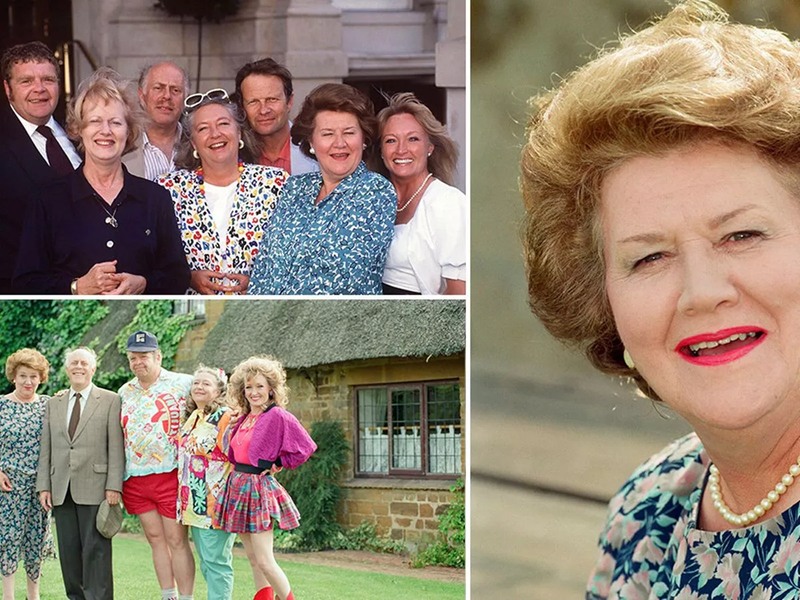
Daisy: The most grounded of the sisters, Daisy lives in a modest council estate with her husband, Onslow. Their home is a stark contrast to Hyacinth’s pristine abode, yet Daisy seems content. However, her environment is telling—cluttered and unkempt, it suggests a woman who has resigned herself to her circumstances, perhaps as a coping mechanism for deeper emotional scars.
Rose: The sexually liberated sister, Rose’s promiscuity stands in direct contrast to Hyacinth’s repressed sexuality. Rose’s behavior may be seen as a manifestation of Hyacinth’s own suppressed desires, acting out in a manner that Hyacinth would never dare.
Violet: The wealthiest of the sisters, Violet’s life appears to be the one Hyacinth aspires to. Yet, Violet’s marriage to Bruce, a man who may be gay or trans, hints at complexities and secrets that Hyacinth is unwilling to confront.
Their father, a lecherous figure who continually harasses women, including his daughters, casts a long shadow over the family. His behavior may explain the dysfunction within the family unit—Hyacinth’s obsessive need for social status, Daisy’s depressive state, Rose’s promiscuity, and Violet’s questionable marriage—all could be coping mechanisms for the trauma inflicted by their father.
The Tragic Underpinnings
The comedy of ‘Keeping Up Appearances’ often masks the tragedy at its core. Hyacinth’s relentless pursuit of social status is not just a harmless quirk but a manifestation of deep-seated insecurities and unresolved trauma. Her obsession with appearances, her denial of her past, and her strained relationships with her family all point to a woman in deep psychological distress.
Her insistence on associating with the “right sort of people” and her constant efforts to impress others are not merely comedic traits but reflect a desperate need for validation and acceptance. This need stems from a profound fear of rejection and a belief that her true self is unworthy of love and respect.
The Legacy of Hyacinth Bucket
Hyacinth Bucket remains one of television’s most complex and enduring characters. While ‘Keeping Up Appearances’ is often remembered for its humor and wit, a deeper analysis reveals a narrative rich with psychological complexity and emotional depth. Hyacinth’s story is a poignant exploration of identity, denial, and the human desire for connection and acceptance.
In revisiting Hyacinth’s world, we are reminded that behind every facade lies a story waiting to be told—a story of pain, longing, and the search for meaning in a world that often values appearances over substance.


Comments
Post a Comment